
Anatomy in Motion
Balance in every step
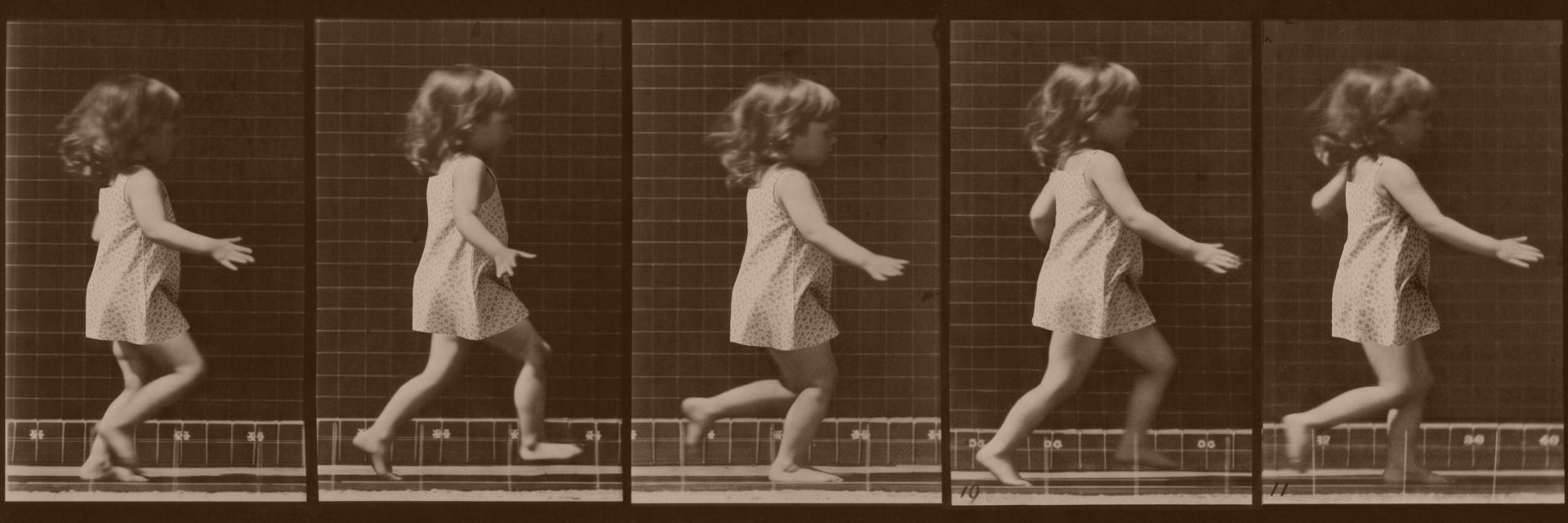
Walking is an exercise in (im)balance. With every step you shift your centre anew, and your centre of gravity traces a path across the sole of your foot, from the heel to the big toe.
For many people that path has become narrow, wobbly or painful. You start taking smaller steps, you watch the ground, or you stay within reach of something to hold on to. Once you walked without effort. Somewhere along the way, you lost that.
Foot pain, knee pain, bunions
The complaints people bring here include:
- bunions
- plantar fasciitis
- ankles that keep going over
- knee pain
- pain on the outside of the hip
- a painful lower back
- pain in the neck or shoulders
- a fear of falling
- stiffness after walking or sport
Often there are also things you no longer find easy. Sitting on the floor, because how will you get up again? Going downstairs. Tying your laces. Trainers with Velcro, because they're easier. Pulling on tights, which asks you to bend at the knees and hips. Getting up from a chair.
If you recognise several things on this list, that's no coincidence. The place that hurts is usually the place compensating for movement that's missing somewhere else. These aren't separate complaints but a single pattern, making itself felt in different places.
What lies behind recurring injuries
Your nervous system registers the pressure under your feet and passes that information on to your muscles, fascia and joints. A foot or knee problem is bound up with your balance and with how you move elsewhere in your body.
When a movement hurts, your brain restricts it. The first thing to go is the micro-movement of the deeper muscles that stabilise your joints and keep your movement fluid. You feel a click or a catch in a joint, and you force yourself through that turn or that step anyway. What's left is stiffness, pain and fatigue in places where you once moved with pleasure and ease. As long as your body needs that solution, the complaint will keep coming back. Treating the place that complains does little to change that.
Exploring your movement pattern
The movements we explore are components of the gait cycle. You move forwards and backwards, sideways and in rotation, and notice what comes easily and what doesn't. The left side yes, the right side no, or only with more effort. A movement you never make. A movement that hurts and that you'd rather avoid. And you notice what you do instead.
Your injury history then stops being a story you tell and becomes something you feel as you move.
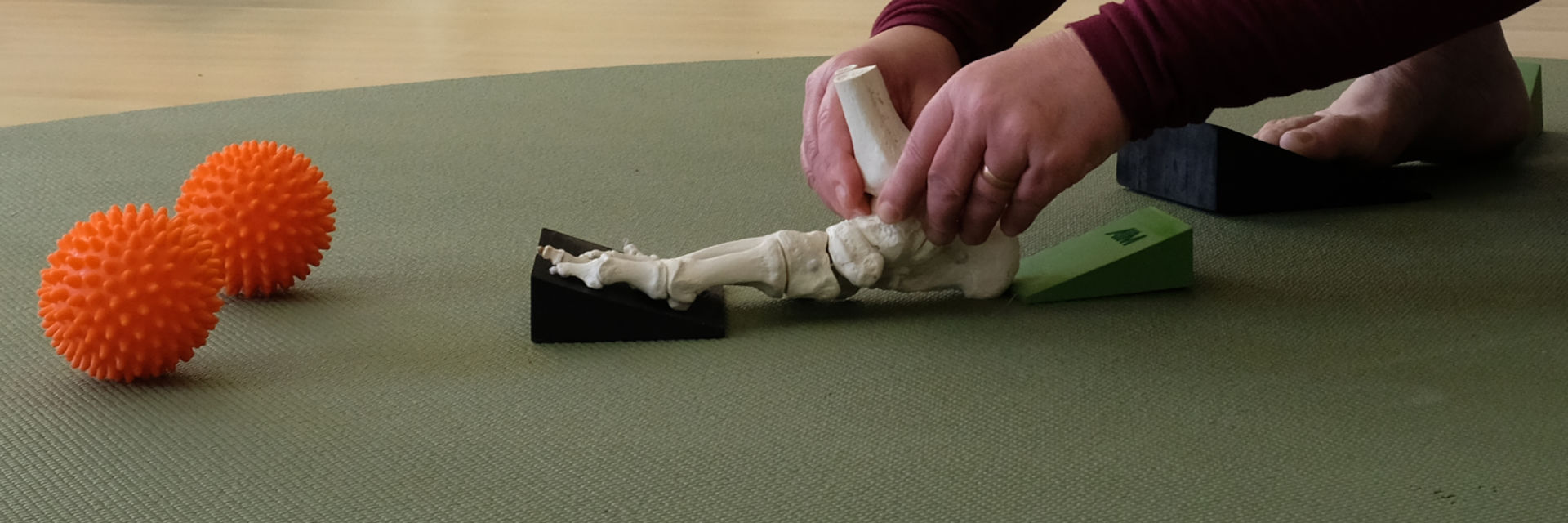
Sensing how the pressure of your weight travels across the sole of your foot is the key to change. It isn't the number of repetitions that takes you further, but what you notice as you move. A wedge under your heel or forefoot can help you recover a movement you'd lost, rather like an insole, only temporary. Once your brain has that option back, it no longer needs the wedge. You can take a wedge home to experiment with.
Gary Ward's Flow Motion Model
Gary Ward developed Anatomy in Motion. He looked at the shape of the joint surfaces and the directions in which muscles pull, and from that arrived at a single rule: if every joint can fully open and close again in all three planes of movement, you have access to effortless movement.
The model describes what happens in one gait cycle: which joint moves, in which direction and at what moment, across the six phases between the heel touching down and the big toe pushing off. That makes it possible to see which phase you skip, or which comes too early or too late.
Anatomy in Motion is a movement oriented education system. It is based on what the body does and when it does it. What I mean by that is what joints do, in what dimension of movement and in what time, for instance in our gait cycle.
Meet first, or start straight away
A first conversation is free and commits you to nothing. Together we look at what you'd like to achieve and what would suit you.
If you'd rather begin at once, you can book an introductory series of three sessions. It costs €195.
The same ground is covered in the Walking with Ease group class, in a small group. Here you work one to one on whatever stands most in your way.
My problems were many and varied: neck pain, headaches and back pain, difficulty walking, trouble getting up. The result is that I'm no longer in pain, I can take a walk through town again, I no longer knock over café tables when I stand up, and even my bunion is only a quarter of what it was, so I can wear ordinary shoes again. Because my body tells me there's still more to gain, I'm carrying on with my sessions.
Would you like to move smoothly and without effort?
The first conversation is free
View the online calendar